


Moving to Thailand

- Table of Contents
- Moving to Thailand: A Guide to Mental, Emotional & Social Adjustment
- Preparation - Setting Realistic Expectations Before Moving to Thailand
- Mental & Emotional Adjustment in a New Culture
- Different Ways of Working: Logic, Etiquette & Behaviour
- Education and International Schools
- Forward Planning and your Relocation Timeline
- FAQs plus How to Find Support
Moving to Thailand – A Guide to Mental, Emotional & Social Adjustment
Moving to Thailand can mark the beginning of a life-changing journey. For many, the idea of a new life in the “Land of Smiles” brings feelings of excitement, freedom, and renewal. Yet beneath the anticipation, it is natural to experience uncertainty, disconnection, or emotional strain as familiar patterns of life shift. Adjusting to a different culture, language, and rhythm of daily living requires both preparation and emotional resilience. Counselling Thailand understands that moving abroad involves more than logistics; it is a deeply personal transition. Our counselling and support services can help you explore your motivations, manage the mental and emotional impact of relocation, and strengthen your sense of stability and belonging as you begin this new chapter in Thailand.
The Appeal of Moving to Thailand as a New Life Venture
The appeal of moving to Thailand is rarely just one thing; it’s a blend of culture, climate, community and opportunity that together make the prospect so compelling. Many people are drawn by Thailand’s rich cultural life such as the food, festivals, friendly informality and the slower, relationship-centred rhythms that contrast with their previous routines. For others, the warm tropical climate and the chance to live closer to nature promise a healthier, more relaxed daily life. Equally powerful is the sense of community: long-standing local networks, lively expatriate scenes and welcoming neighbourhoods can quickly reduce the isolation that often accompanies relocation. Finally, practical opportunities, whether this be; a lower cost of living, new work prospects, or the flexibility afforded to digital nomads, give the move tangible economic and lifestyle appeal.
Yet this optimism is best held in focus with a measure of realism. Balancing excitement with an awareness of potential emotional and cultural challenges helps prevent early disappointment. Language barriers, different social customs and occasional frustration with local systems are normal and manageable when anticipated rather than ignored. Over time, the initial thrill of novelty often matures into deeper self-discovery: the move becomes a mirror that highlights values, priorities and personal resilience. Many people find that what began as an external change, such as a new address and a new routine, prompts an internal re-ordering, clarifying what matters most and opening avenues for personal growth.
Viewed this way, moving to Thailand is not just a logistical project but a chance to create a more balanced and meaningful life. With thoughtful preparation and openness to uncertainty, the new venture can become a period of lasting emotional enrichment, a chance to build new relationships, explore fresh interests, and reshape daily life around healthier rhythms and renewed purpose.
For individuals or couples considering retirement in Thailand, our related webpage Retiring in Thailand explores the emotional, social and practical aspects of this transition.
Preparation – Setting Realistic Expectations Before Moving
Preparing to move to Thailand involves much more than booking flights or gathering documents. While practical organisation is essential, mental and emotional readiness often determines how smoothly the transition unfolds. Taking time to reflect on your motivations, expectations, and concerns can help create a more grounded and resilient start to life abroad. Many people benefit from stepping back to ask themselves foundational questions: “Why am I moving?”, “What am I hoping to find?”, and “What aspects of my life do I hope will change, or stay the same?” Honest responses to these questions provide clarity and help anchor the relocation in personal meaning rather than impulse or external pressure.
Developing realistic expectations is another important part of preparation. Life in Thailand offers warmth, hospitality and cultural richness, but also unfamiliar systems, slower bureaucratic processes and daily routines that may differ significantly from what you are used to. Recognising these contrasts ahead of time helps reduce frustration and prevents the early stages of relocation from feeling overwhelming. A balanced understanding of both the rewards and the challenges enables you to enter the transition with flexibility and patience.
For many people, talking through their plans with a counsellor can provide essential insight. Counselling offers a neutral private space to explore potential stressors, examine assumptions, and identify emotional vulnerabilities before they surface during the move. This kind of preparation can be particularly valuable for individuals or couples navigating complex personal circumstances or making the move during a period of life change. Practical resources also play an important role: reading about Thai culture, connecting with expatriate communities, and planning early routines can all ease the adjustment process. For further guidance on adapting to daily life and building realistic expectations, see our related blog post Living in Thailand.
Building a New Life After Moving to Thailand – Lifestyle, Community and Mental Wellbeing
Settling into life in Thailand is a gradual process, one that unfolds through the small, everyday routines that eventually create a sense of belonging. After the initial excitement of arrival, many people discover that building a new life requires patience, openness, and a willingness to experiment with unfamiliar ways of living. Establishing simple routines, such as regular places to shop, preferred cafés, daily walking routes, or weekly activities, helps create stability. These small anchors provide emotional reassurance at a time when much else can feel new or uncertain.
Forming a social network is another essential part of building a meaningful life abroad. Thailand offers many opportunities for connection, whether through local neighbours, workplace relationships, expatriate communities, or interest-based groups. Friendships may not develop at the pace you are accustomed to; cultural differences in communication style or social openness can influence early interactions. Approaching these moments with patience and curiosity allows relationships to grow naturally. Even brief, friendly exchanges can gradually help you feel part of the community and reduce the sense of isolation that sometimes accompanies relocation.
For anyone looking to retire to Thailand we recommend our blog Retiring in Thailand for more information.
Looking after your emotional wellbeing becomes especially important during the early months of settling in. It is quite common to experience moments of fatigue, frustration, or homesickness as you adapt to new systems and expectations. Integrating practices such as mindfulness, journaling, or gentle exercise can help keep emotions balanced. Many people also find comfort in maintaining certain familiar habits; for example, reading, cooking favourite meals, or keeping in touch with loved ones, while gradually embracing the new opportunities around them.
Counselling can be a valuable source of grounding as you build your new life. Regular sessions provide a confidential place to reflect on experiences, strengthen resilience, and stay emotionally centred during the transition. For support in establishing a strong foundation in Thailand, you may contact Counselling Thailand to enquire about adjustment counselling sessions.

Mental & Emotional Adjustment in a New Culture
Adjusting emotionally and psychologically to life in Thailand is a deeply personal journey, one that often unfolds in distinct stages. Many people begin with a period of excitement and curiosity, when everything feels fresh and stimulating. Yet as the weeks pass, cultural differences in communication, personal space, and everyday expectations can become more noticeable. Thailand’s preference for indirect expression, calm interactions, and the avoidance of open conflict may feel unfamiliar at first. Understanding these cultural rhythms helps reduce misunderstandings and supports healthier adaptation.
It is common to move through what is known as the “culture shock cycle”: an initial honeymoon phase, followed by periods of fatigue, frustration, or self-doubt, then gradual adjustment, and eventually a sense of integration. These fluctuations are not signs of failure but normal responses to major transitions. Recognising them makes the experience less unsettling and allows you to respond with self-compassion rather than criticism.
Maintaining your core identity while remaining open to new ways of thinking is an important part of the adjustment process. You may find that some habits, values, or assumptions shift as you learn more about Thai social norms. This gradual evolution can be enriching, offering opportunities for personal growth and emotional maturity. At the same time, staying connected to familiar parts of your life, such as your interests, routines, and meaningful relationships, creates balance and stability.
Periods of stress, homesickness, or emotional fatigue can arise during this transition, especially when navigating unfamiliar systems or managing expectations from family and friends abroad. Counselling can offer steady support during these moments. Speaking with someone experienced in cross-cultural transitions provides a safe space to explore your feelings, strengthen coping strategies, and regain clarity when emotions become overwhelming.

Different Ways of Working: Logic, Etiquette & Behaviour
Understanding how work unfolds in Thailand is central to feeling confident and effective in your professional life. For many newcomers, the most noticeable difference is not the work itself, but the approach to working: how problems are solved, how decisions are made, and how colleagues relate to one another. Thai workplace culture places strong value on harmony, respect, and patience. Interactions are often polite and measured, and communication tends to be indirect, particularly when addressing sensitive matters or potential conflict. This approach helps maintain positive relationships, an important foundation of Thai working life, but may feel unfamiliar to those coming from more forthright or analytical cultures.
Interpreting subtle cues becomes an essential skill. A gentle hesitation, a softening of tone, or a quiet pause may be used instead of a direct “no.” Similarly, suggestions may be framed in ways that preserve the other person’s sense of dignity, or kreng jai, a cultural concept that emphasises thoughtfulness and consideration for how one’s actions affect others. Recognising these nuances helps prevent misunderstandings and reduces frustration when communication styles differ.
Differences in problem-solving approaches can also arise. While some cultures emphasise rapid decision-making and assertive ownership of tasks, Thai workplaces may prefer a more collaborative and consensus-based style. Decisions may take longer, not because of reluctance, but because maintaining team cohesion is valued as highly as achieving the desired outcome. Adapting to this rhythm can ease the emotional strain that sometimes emerges when expectations collide with local norms.
For many expatriates, developing emotional resilience is key. Accepting that there may be multiple “right” ways of working, and learning to shift perspective strengthens confidence and adaptability. Counselling can support this process by helping individuals reflect on their responses to cultural differences and develop healthier coping strategies for workplace stress.
Work, Employment Opportunities & Digital Nomads
Work plays a significant role in shaping how quickly people settle into life in Thailand. For many, employment brings purpose, structure, and a natural pathway to forming new relationships. Yet starting a professional life in a new cultural environment can also create emotional pressure. Enthusiasm about new opportunities often sits alongside uncertainties about performance, communication, and belonging. Thailand’s workplaces emphasise harmony, politeness, and a non-confrontational approach; these values can feel noticeably different from more direct or task-driven cultures. Understanding these expectations early can reduce misunderstandings and help you feel more at ease during the first months of adjustment.
People arriving for traditional employment, business ventures, or teaching roles often discover that Thai workplace etiquette has its own rhythm. Hierarchy may be more formal, communication less direct, and decisions reached more gradually. These differences do not reflect inefficiency but a cultural emphasis on respect and collective cohesion. Recognising this can help newcomers adapt without feeling discouraged. A willingness to observe, listen, and approach challenges with curiosity makes the transition far smoother.
Digital nomads also form a growing part of Thailand’s expatriate community. The country’s cafés, co-working spaces, and affordable lifestyle offer an attractive base for remote work. Yet working independently can bring emotional challenges of its own. Without a traditional workplace, digital nomads may experience isolation, blurred boundaries between personal life and work, or pressure to remain constantly productive. Establishing structure, maintaining regular social contact, and joining professional or interest groups can help counter these effects.
For couples relocating together, work adjustments can create additional strain, especially if one partner settles more quickly than the other or faces unexpected challenges. Supportive communication becomes essential during these periods of transition. Couples Counselling can help partners navigate shifting roles, expectations, and work-life balance.
Education and International Schools for Families
For families moving to Thailand, choosing an international school is often one of the most important steps in the relocation process. Schools provide much more than education; they become a central source of stability, routine, and community during a time of change. Children may adapt more quickly than adults in many respects, yet the transition to a new academic environment can still bring emotional challenges. New teaching styles, expectations, cultural norms, and social dynamics can feel overwhelming at first. Understanding these potential pressures helps families prepare with greater sensitivity and confidence.
International schools in Thailand typically bring together students from many cultural backgrounds, creating rich, diverse environments. While this diversity often becomes a strength, the first weeks can feel daunting for children who are navigating unfamiliar surroundings, new friendships, and different ways of learning. Younger children may express anxiety through behaviour changes, mood shifts, or reluctance to attend school, while older students may struggle with identity, confidence, or academic adjustment. Open communication within the family helps children process these feelings, reminding them that uncertainty is normal and temporary.
Parents also undergo their own period of adaptation. Building relationships with teachers, learning school procedures, and understanding cultural expectations around communication and parental involvement can take time. Approaching these interactions with patience and curiosity helps foster mutual trust. Many schools offer pastoral care teams, counsellors, or newcomer programmes, and engaging with these resources early can ease the transition for the entire family.
Emotional support at home is equally important. Establishing routines, encouraging regular conversations about school experiences, and giving children space to make sense of change all contribute to a smoother adjustment.
For detailed resources and additional support related to child and teen adaptation to their new international schools in Thailand, please visit our Child Therapy and Teen Counselling pages.
Forward Planning and your Relocation Timeline
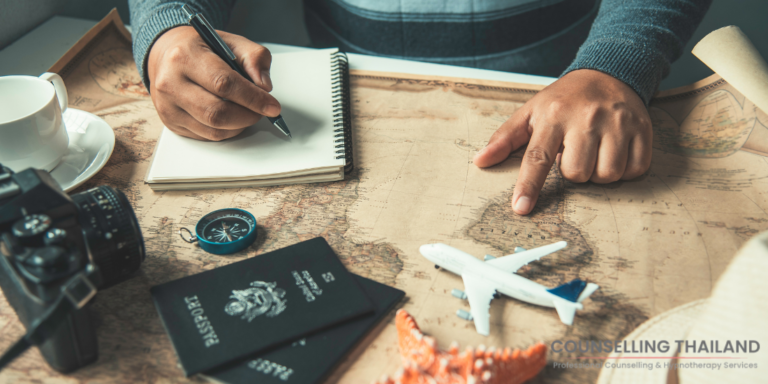
Forward planning is one of the most important factors in ensuring a smooth and emotionally manageable move to Thailand. As the relocation date approaches, many people experience what is often called the countdown effect: time begins to feel as though it is accelerating, tasks appear to multiply, and emotional pressure can increase unexpectedly. What once felt comfortably distant can suddenly become urgent. Recognising this mental and emotional shift helps you manage the transition with greater clarity and control.
Creating a structured, written relocation plan is one of the most effective ways to reduce stress. Listing key tasks, such as visas, finances, health insurance, property arrangements, and document preparation, brings order to a process that can otherwise feel overwhelming. Breaking each task into smaller steps also makes progress more visible, offering reassurance as the departure date draws closer. Equally important is setting aside time for personal and social matters: family visits, meaningful conversations, farewells, and opportunities for closure all play a vital role in supporting emotional wellbeing.
Good time management during this period is not only practical but psychological. Rushing through the final weeks can lead to emotional saturation, decision fatigue, or last-minute doubts. Allowing sufficient time for rest, reflection, and small moments of enjoyment helps maintain balance during the busiest phase of relocation. Couples and families may find it helpful to discuss who is responsible for specific tasks, reducing the risk of misunderstandings or uneven emotional load.
Moving to Thailand – Emotional and Social Adjustment FAQs
- What are the most common emotional challenges when moving to Thailand?
Many people experience a mix of excitement and uncertainty during the early stages of relocation. Emotional challenges often include culture shock, feelings of disconnection, homesickness, and frustration with unfamiliar systems or communication styles. These reactions are normal and typically ease as routines form and confidence grows.
- How can counselling help with relocation stress or culture shock?
Counselling provides a safe, non-judgmental space to explore the mental and emotional impact of relocating. A therapist can help you understand the stages of adjustment, strengthen coping strategies, manage stress or homesickness, and navigate the identity shifts that often accompany life abroad. Support is especially helpful during moments when challenges feel overwhelming or persistent.
- What steps can I take to prepare emotionally before moving abroad?
Preparation begins with self-reflection. Clarifying your motivations, expectations, and potential concerns creates a more grounded start. It is helpful to visualise realistic daily life, research cultural norms, discuss the move with loved ones, and consider how you typically respond to change. Counselling can also help identify stressors and emotional strengths in advance.
- How long does it usually take to feel settled after moving to Thailand?
Adjustment varies from person to person. Many individuals begin to feel more settled within three to six months, while deeper emotional integration may take a year or more. Factors such as work, social connections, structure, and personal resilience influence the pace. It is helpful to view settling in as a gradual journey rather than a fixed deadline.
- What should couples consider before relocating together?
A shared relocation can strengthen a relationship, but it may also highlight different expectations, coping styles, or levels of adaptation. Couples should discuss their motivations, financial planning, work expectations, and emotional needs before moving. Open communication and a willingness to adjust together are essential. Counselling can help partners prepare for this transition.
- How can I manage homesickness and feelings of isolation?
Homesickness is a natural part of relocation. Creating daily routines, staying connected with loved ones, forming new friendships, and engaging in meaningful activities all help ease the emotional strain. Mindfulness, journaling, and regular self-care also support emotional balance. If feelings of isolation persist, counselling can provide grounding and guidance.
- What cultural differences in communication should I be aware of?
Thai communication is generally indirect and polite, with a strong emphasis on harmony and respect. People may avoid open confrontation, speak gently when declining a request, or use subtle cues rather than direct statements. Understanding these norms reduces misunderstandings and helps build positive relationships in both social and workplace settings.
- How can families help children adjust to international schools in Thailand?
Children often adapt quickly, but they may also experience anxiety about new social groups, teaching styles, or cultural expectations. Parents can support them by maintaining open communication, creating consistent home routines, and engaging with school support services when needed. Encouraging children to express emotions freely helps them settle more confidently.
- What support does Counselling Thailand offer to new expatriates and digital nomads?
Counselling Thailand provides support tailored to individuals, couples, families, and digital nomads. Services include adjustment counselling, support for workplace stress, cross-cultural communication guidance, relationship support, and resources for managing anxiety, homesickness, or identity changes during relocation.
- When is the best time to seek professional counselling during the relocation process?
Counselling can be helpful at any stage; before, during, or after your move. Many people benefit from early sessions to prepare emotionally, while others reach out once challenges arise or feelings become difficult to manage. Seeking support sooner rather than later often prevents small concerns from developing into more significant stress.
Recognising When You Need Support and How to Find It
Relocating to Thailand is both an outward journey and an inward one. While the practical steps of moving, such as securing visas, organising belongings and arranging accommodation, tend to dominate the early stages, the emotional and psychological dimensions often continue long after the physical relocation is complete. Taking time to reflect on your experiences, expectations, and emotional responses can help you navigate the transition with greater awareness and resilience. Many people find that relocation brings surprising insights: shifting priorities, changing relationships, and a deeper understanding of what they need to feel grounded and fulfilled.
Support is an essential part of this journey. While some individuals adjust quickly, others experience periods of uncertainty, fatigue, or emotional strain, often at unexpected times. These reactions are normal and do not indicate that the move was a mistake. Rather, they reflect the complexity of adapting to a new cultural environment while managing personal and social transitions. “Recognising when you need assistance is not a sign of weakness but an important step toward maintaining stability and wellbeing”.
Professional guidance can make a meaningful difference during these periods. Counselling Thailand offers a supportive, confidential space where you can explore your feelings, clarify your needs, and develop strategies for emotional balance throughout the relocation process. Whether you are preparing to move, adjusting to early challenges, or seeking ongoing support as you build your new life, speaking with a trained therapist can provide clarity and reassurance. Counselling can also help couples and families navigate the shared aspects of relocation, strengthening communication and helping each person feel understood.
If you would like to discuss your situation or explore whether counselling could support your transition, you are warmly invited to Contact Us and schedule an initial discussion with Counselling Thailand.
How to Get Started with a Free Initial Consultation
At Counselling Thailand, we understand the importance of finding the right therapist for addressing your concerns and needs. That’s why we offer a free initial 15 minute consultation for individuals and 30 minutes for couples and families before booking your first therapy appointment.
First, complete our online client enquiry form. This will give a little extra information to help us select whom we believe the most suitable therapist would be and then we can email you a list of available appointment times for the free initial call.
During this consultation, we will discuss your specific situation and determine whether our approach aligns with your needs. We will also answer any questions you may have. If you decide to proceed with counselling, we can then schedule the first full session(s) at a mutually convenient time.
If you have any questions before booking the free initial call you can either visit our Frequently Asked Questions Page, or mention these whilst completing the online enquiry form.